

He completely lost it.” “She just snapped.”
We’ve all witnessed it.
Someone who’s usually calm and composed suddenly becomes defensive in a meeting—or, on the contrary, shuts down completely. Afterwards, everyone says the same thing:
“That wasn’t like them. I didn’t recognize them.”
But the reality is different.
It was them.
They didn’t suddenly become someone else. They simply moved from their usual way of functioning into a predictable stress response.
This is precisely what Process Communication Model® (PCM) helps us understand—not only in ourselves, but also in the people we lead every day.
Self-Awareness: The Foundation of Better Leadership
Managers who lack self-awareness often manage others as if everyone thinks, communicates, and reacts exactly as they do.
That’s perfectly natural.
We instinctively communicate using the style that feels most comfortable to us. We expect others to respond as we would. And when misunderstandings arise—or when one particular employee constantly challenges us—we’re often surprised.
The problem is that people don’t all operate in the same way.
What motivates one person may discourage another.
A very direct instruction might reassure one employee while making another feel attacked.
Some people thrive with autonomy; others need a clearer framework.
Some primarily seek recognition for their results, while others first need to feel personally valued.
A Real-Life Example
I recently worked with a manager whose personality was highly analytical, logical, and structured.
One member of their team had a very different communication style: warm, relationship-oriented, and emotionally sensitive.
The manager focused immediately on tasks.
The employee first needed recognition and human connection before discussing work.
The result?
The manager appeared cold and distant.
The employee seemed disengaged.
Once they understood the difference, the solution was remarkably simple.
The manager started each conversation with a few genuine words of appreciation before moving to business.
Almost immediately, cooperation improved and tensions disappeared.
Nothing magical happened.
They simply learned how each person functions.
This is why self-awareness isn’t just personal development—it becomes a practical leadership skill.
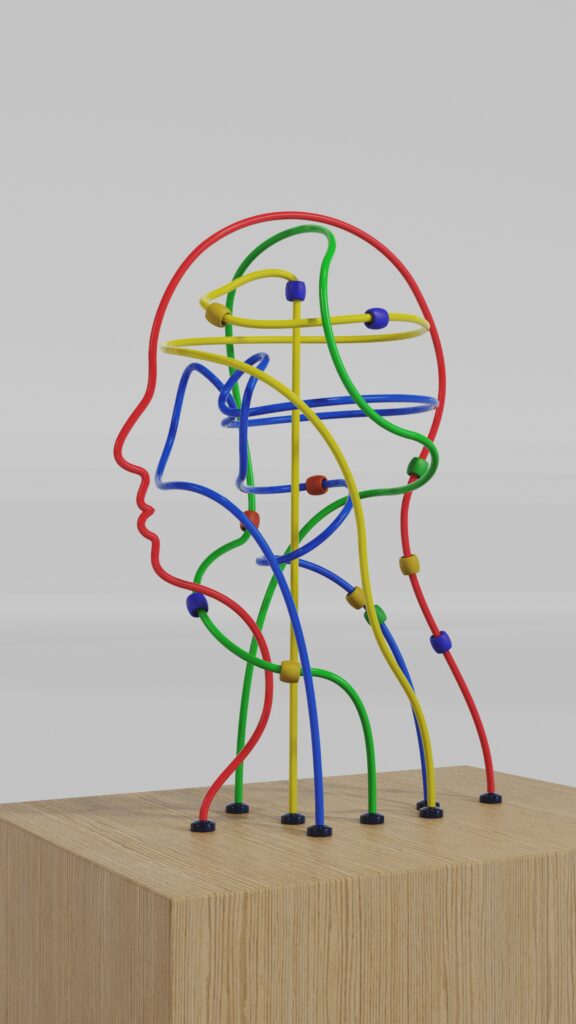
Understanding Your Own Stress Mechanisms
Beyond everyday communication, Process Communication Model® also explains what happens internally when pressure increases.
Several key concepts make the model especially valuable.
Base and Phase
PCM distinguishes between your Base—the stable foundation of your personality—and your Phase, which can evolve throughout different periods of life.
Your current Phase influences your psychological needs and your primary sources of motivation.
If you’re unaware of your current Phase, you may find yourself trying to satisfy needs that are no longer the ones driving you, leaving you frustrated without understanding why.
Psychological Needs
Each personality type has its own essential psychological needs.
These may include:
- recognition for accomplishments;
- personal appreciation;
- meaningful relationships;
- opportunities for reflection;
- excitement and variety;
- or structured time.
When these needs aren’t regularly fulfilled, stress gradually builds—even when nothing objectively serious is happening.
The Stress Sequence
One of PCM’s most practical contributions is its description of a predictable stress sequence.
Stress doesn’t usually appear overnight.
It develops progressively.
Small behavioural changes often appear first—subtle enough that neither we nor others notice them.
If these early signals are ignored, stress intensifies and behaviour becomes increasingly visible and potentially damaging.
Recognizing your own early warning signs allows you to intervene before reaching the point where relationships, decision-making, or performance begin to suffer.
Communication Channels
PCM also demonstrates that the effectiveness of a message depends not only on what is said but how it is communicated.
A message that seems perfectly clear to one person may feel confusing, impersonal, or even irritating to someone with a different preferred communication style.
Many workplace conflicts are not caused by disagreement over the content—but by differences in communication style.
Learning to adapt your communication dramatically improves collaboration, trust, and understanding.
A Practical Tool for Leadership—and Everyday Life
Whether your goal is to become a better manager or simply understand yourself more deeply, Process Communication Model® follows a simple principle:
The better you understand what motivates you—and what triggers your stress—the better your decisions become.
Professionally.
Personally.
And especially when pressure is high.
At Human Déclic, individual PCM debriefings typically last between two and four hours, depending on the format chosen.
Participants leave with a clear understanding of:
- their Base personality;
- their current Phase;
- their psychological needs;
- their preferred communication styles;
- and their personal stress sequence.
PCM can also be delivered through individual coaching, leadership development programmes, team workshops, or training for managers, HR professionals, and project leaders.
Ready to Discover Your PCM Profile?
Whether you’re looking to improve leadership, strengthen communication within your teams, or better understand your own reactions under pressure, Process Communication Model® offers practical insights that can transform the way you work and relate to others.
Let’s start the conversation.